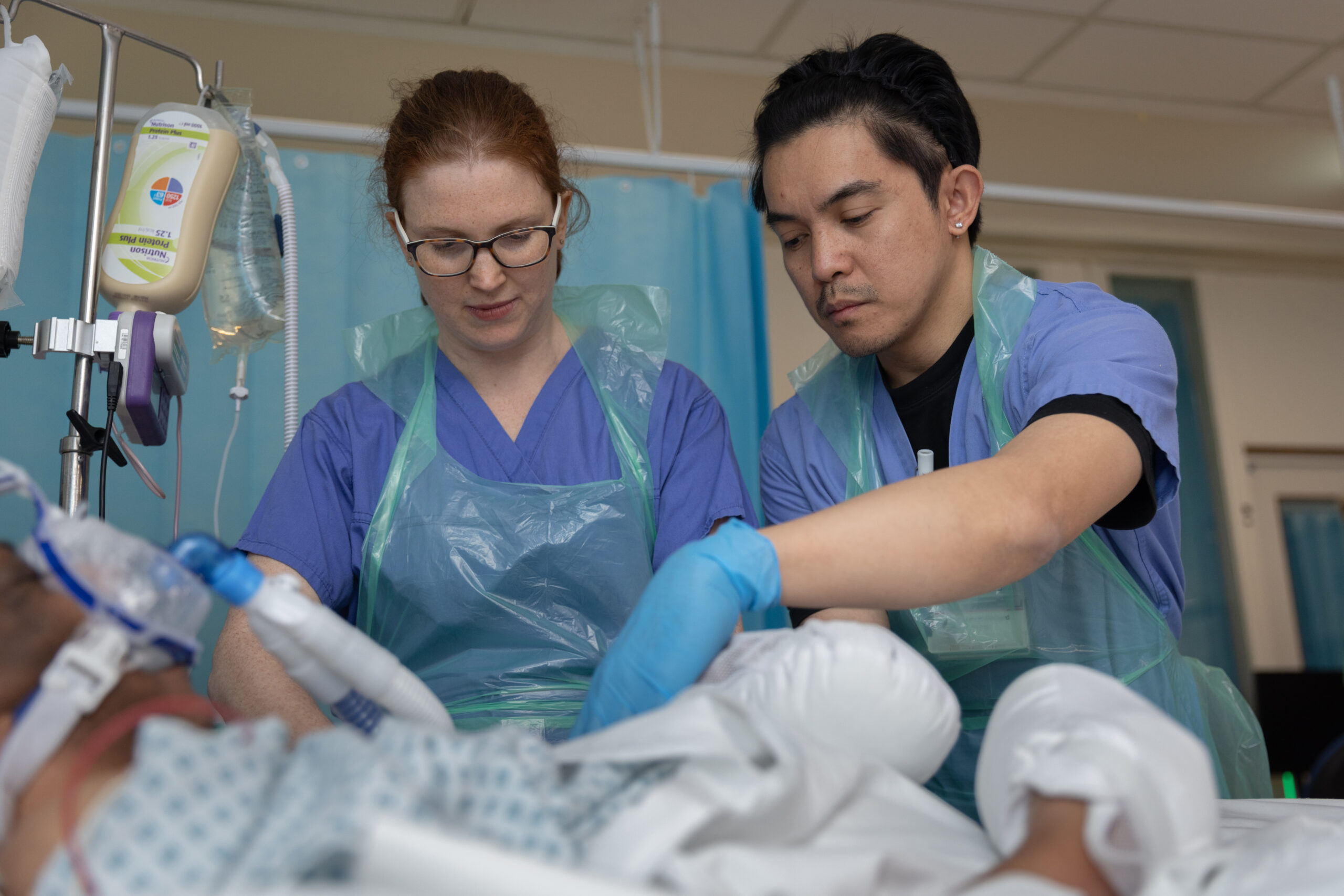
The emergency department (ED) at Kingston Hospital is the critical front line for a busy acute NHS trust, providing urgent and often life-saving care to patients 24/7. It serves as the first point of contact for individuals experiencing serious injuries, medical emergencies, or acute health crises. In an overstretched NHS trust, the service is under significant pressure, managing increased patient volumes and a greater number with more severe conditions that require higher levels of care.
Plans are currently being finalised to refurbish ED’s resuscitation unit, which is a highly specialised and equipped area designed for the immediate assessment and treatment of critically ill or injured patients. Its primary purpose is to provide rapid, life-saving interventions to stabilise patients whose conditions are life-threatening. Much like the rest of the emergency department, the resuscitation unit is continuously busy, typically assessing and treating nearly 500 patients each month.
Two options are currently under consideration. The first option entails refurbishing the original resuscitation unit comprising of bays one to five, while the second option envisages incorporating the adjacent mental health assessment unit (MHAU). The NHS trust is currently assessing whether the MHAU can be moved to a more suitable location, while providing a facility that better meets the particular needs of this patient cohort. Doing so, would create the means to provide a larger resuscitation unit by removing the wall that currently separates the two spaces
The benefits associated with the upgrade of the resuscitation unit are:
- Improved experience for patients by incorporating glass doors to replace the existing curtains, improving privacy and dignity
- Inclusion of lead lined walls to each cubicle to take x-rays and upgrade of each bay to optimise their set-up and facilitate better workflows, communication and faster decision making
- Creation of a more modern, bright and welcoming environment with the inclusion of new flooring, ceilings, wash hand basins, lighting and a piped water dispenser for the benefit of both patients, their loved ones and healthcare professionals
- Incorporation of a resuscitation-specific sluice and blood chute system for ease of use, so these facilities are not having to be used elsewhere, saving time and ensuring safe staffing levels are maintained at all times
- Increased storage capacity within the unit for trauma mattresses and specialist equipment
- Future proofing the unit to accommodate evolving clinical needs and technologies, ensuring high standards of care can be maintained into the future.
Incorporating the MHAU would also make it possible to include one or two isolation bays for very sick patients that need treating but have to be kept isolated from other patients. It would also allow for the bays to be arranged around the perimeter of the unit with a central nursing station located in the centre.
If this is something you’d be interested in learning more about, please contact Rob Aldous on 020 8973 5040 or by email at r.aldous@nhs.net. Thank you.